


Phoenix PhotonicsOptical Fiber Components & Modules
HomeProductsSolutionsProjectsTechnologyNewsAbout usContact usOnline Storemenu ends

News

SPIE Photonics West Exhibition 24th - 26th January

Visit Phoenix in the UK Cluster, booth # 4109

Phoenix Photonics in World Launch of 2 Micron Fiber Couplers at Photonics West

Phoenix Photonics, the UK based fiber optics specialist, will next week show for the first time its new 2 micron fiber couplers as it expands its product range across longer wavelengths.

Phoenix Photonics will be exhibiting at Photonics West from the 24 – 26 January in the UK Pavilion, booth #4109, for the first time this year. With growing demands for products in the 2000 nm range, Phoenix Photonics has addressed the market by extending the operational wavelength of its current selection of all-fiber based components and introducing 2 micron couplers available in 1x2, 2x2, tap, and cascaded configurations. The company’s proprietary in-house technology facilitates the step to offer components built on single mode fiber specifically designed for optimized operation in the 2000 nm wavelength band.

Dean Giles, Operations Director at Phoenix Photonics said: “In order to optimize the performance of the fused couplers we have designed and built our own fusion rigs, and developed the processing methods. It’s exciting to have the new technology in-house and we plan to continue to invest in new and innovative products in the coming year.”

In addition to the new couplers, Phoenix will display much of its existing product portfolio of conventional telecommunications wavelengths and the 2000 nm range, these include:

  • Optical Phase Shifter

  • Side Polished Fibers

  • Polarization Scanner / Controller

  • Polarization Scrambler

  • Multi-channel Polarization Controller

  • Electronically Driven Polarization Controller (manual and PC options)

  • Fiber Depolarizer

Phoenix primarily provides optical fiber components and modules for telecommunications test and measurement instrumentation and sensing systems. The company also supplies university R&D departments and research establishments developing next generation systems.

For further information, or to arrange an interview with Dean Giles, Operations Director at Photonics West from 24 – 26 January please contact Emma Johnson or Brian Dolby on +44(0)1636 812152 or by email to emma.johnson@proactive-pr.com or brian.dolby@proactive-pr.com.

Ends


Career opportunities at Phoenix

We are happy to announce exciting job opportunities for optical engineers at entry and senior levels. Please click here for full details.

Phoenix Photonics' CEO Ian Giles interviewed by ECOC TV

September 2011

Ian Giles talks about Phoenix's new Firebird instrumentation range, and the European project Mode-Gap. Mode-gap aims to develop the disruptive technology and concepts needed to enhance our communications infrastructure 100-fold to avert network gridlock and reduce energy consumption.

Phoenix Photonics' CEO Ian Giles interviewed by Total TeleVision

15 September 2011

Ian Giles talks to Total TeleVision about current research investigating potential solutions to avoid future information gridlock in fibre optic networks.

NEWS RELEASE

08 September 2011

Phoenix Photonics to unveil advanced multi-channel polarization controller at ECOC 2011

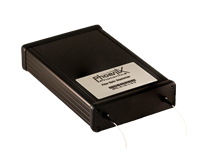
Phoenix Photonics, the UK based fibre optics specialists, will unveil a new multi-channel polarization controller at this month’s flagship ECOC exhibition in Geneva which will give its customers a “plug and play” capability as they look to manage polarization issues in up to four independent channels simultaneously.

Phoenix (booth number 1363) will be showing the controller as the first product in its Firebird range of instrumentation equipment as it looks to further develop its offering to meet customer demands.

“At Phoenix, we are all about customers. With Firebird, we have responded to customer requests to provide plug and play instruments incorporating the already-successful Phoenix components and our modular approach will give us the flexibility to provide further developments as we move forward,” said Phoenix Photonics CEO Dr Ian Giles.

The instrument is developed around the already-established Phoenix all-fibre three waveplate polarization controller/scanner. Its benefits include:

  • Microprocessor-based control of each individual waveplate
  • Easy-to-use PC interface – USB, RS232 and GPIB and Ethernet as options
  • All-fibre technology
  • Programmable waveforms – sine, square, ramp and user-defined
  • Random scrambling option
  • Optional channel count up to four
  • Benchtop or 19” rack
  • Front panel manual control option

Phoenix primarily provides optical fibre test and measurement instrumentation for the telecommunications and sensing industries. The company also supplies University R&D departments and research establishments looking to develop next generation technologies and solutions.

Ends

For further information, or to arrange a meeting with Dr Ian Giles at ECOC 2011 from 19-21 September, please contact Brian Dolby or Emma Johnson on +44(0)1636812152 or by email to brian.dolby@proactive-pr.com or emma.johnson@proactive-pr.com


NEWS RELEASE

16 August 2011

PHOENIX PHOTONICS IN KEY EUROPEAN UNION PROJECT FOR NEXT GENERATION TELECOMMUNICATIONS

UK fiber optic leader to look at innovative components for 100-fold increase on today’s technology limits


Phoenix Photonics, the UK-based fiber optics specialists, is taking part in a key European Union collaborative R&D project to investigate the technologies required to achieve a 100-fold increase on current telecommunications optical fiber-based network capacity limits.

Phoenix is focused on the critical components part of the project as the EU looks to create an innovative new platform to keep pace with world demand as the telecommunications market moves relentlessly towards potential gridlock as the physical capacity limitations of single mode fiber transmission is reached.

“Components providing the functionality of a network are the fundamental building blocks of any system,” said Phoenix Photonics’ CEO Dr Ian Giles.

“The new fibers proposed within the project – known as MODE-GAP – to facilitate spatial division multiplexing, demand a whole new range of components. Our role is to address the challenge to provide these advanced fiber components, which will be based on our proven in-house technologies”.

MODE-GAP is a project funded under the EU 7th Framework Programme. It is seeking to provide Europe with a lead in the development of the next generation internet infrastructure. Combining the expertise of eight world-leading photonics partners, MODE-GAP will develop transmission technologies based on specialist long-haul transmission fibers, and associated enabling technologies such as novel rare-earth doped optical amplifiers, transmitter and receiver components and data processing techniques to increase the capacity of broadband networks.

Other organisations involved alongside Phoenix are the University of Southampton’s Optoelectronics Research Centre, ESPCI ParisTech, OFS Fitel Denmark APS, the COBRA Institute at Technische Universiteit Eindhoven, Eblana Photonics Ltd, Nokia Siemens Networks GMBH & Co. KG and the Tyndall National Institute of University College Cork.


Ends

For further information, including a photograph of Ian Giles, please contact Brian Dolby or Emma Johnson on +44(0)1636812152 or by email to brian.dolby@proactive–pr.com or emma.johnson@proactive-pr.com.

ECOC Exhibition September 19th - 21st 2011

 Visit us at booth# 1363  


OFC-NFOEC 2011

March 8th - 10th 2011, booth #1348

ECOC Exhibition September 20th - 22nd 2010

Visit us this year at ECOC booth #274

Fiber Optic Phase Shifter

New Product Release (March 2010)

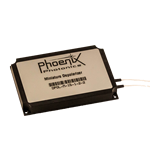
Phoenix Photonics introduces the new low drive voltage Variable Phase Shifter. The simple to operate all fibre device for wideband operation offers >50pi phase shift as standard, and >150pi by request. Applying a voltage to the pins gives a controlled modification of the phase shift through the device. There are no in-line interfaces allowing the full power handling capacity of the fiber to be utilized and offering a virtually zero excess loss and PDL. This component is supplied in a small compact package with simple electronics, available in single mode (SM) or polarization maintaining (PM) fiber format. The Phase Shifter complements the Power and Wavelength range of products currently available from Phoenix.

Photonics Europe 13th - 15th April 2010

Please visit us at Photonics Europe, April 13th - 15th 2010 in Belgium Brussels, booth #405.

Differential Group Delay Line (DGD)

New Product Release (February 2010)

The Phoenix Photonics differential group delay line (DGD) utilises a compact high linear birefringence fiber to provide an accurate fixed differential delay. Based on the technology developed to manufacture high performance Lyot depolarizers, precise differential time delay coils are fabricated. Time delays can be selected from fixed delays to customer selectable delays. The Phoenix DGD boasts many features including an all-fiber design, passive operation and low insertion loss. The DGD unit is commonly used in PMD compensation applications, sensing and PMD emulators.

Differential Group Delay Line (DGD)

Side Polished Optical Fibers

New Product Release (January 2010)

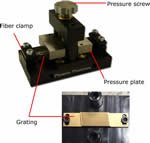
Phoenix Photonics Ltd., has introduced a new product range based on its all fiber technology. Phoenix employs side polishing (evanescent field technology) to manufacture a large range of existing products from Polarizers to VOA’s. Phoenix is now offering the polished fiber substrate as a standalone product. Polished fibers can be useful in optical fiber sensor applications, thermal threshold detection, fiber components, propagation control and much more. Fiber side-polishing technology enables access to the evanescent field of the wave propagating in an optical fiber by removing a section of the cladding. Unlike the more common block mounted technology, this approach provides a surface of defined length parallel to the core. The propagation characteristics of the wave can be modified by the structure and material of the replacement cladding. Variable polished depths and lengths can be achieved to meet the customers requirement.

Electronically Driven Polarization Controller - New improved design

New Product Release (November 2009)

Phoenix Photonics have enhanced their existing polarization management range with the release of the improved bench top electronically driven Polarization Controller. The instrument is based on the Phoenix Polarization Scanner and offers two basic options; a three section manual control with external analogue voltage control in a compact slim-lined bolt on package, or a single channel bench top version. Full state of polarization control is achieved by three cascaded variable fiber waveplates. Control of each individual waveplate describes a complete circle on the Poincaré sphere. The unit allows any SOP to be generated from any arbitrary input SOP. The controller is all-fiber giving nearly zero return loss, very low insertion loss and PDL advantages.

electronically driven polarization controller


OFS-20 Exhibition

7th & 8th October 2009, Booth#7

OFS-20_web_header

New website

Phoenix Photonics launches new website, now available:


 Wide Band Polarizer

New Product Release (September 2009)

 Wideband Fiber polarizer (1280nm to 1640nm) 

Phoenix Photonics Ltd., has Introduced a new wideband fiber polarizer to its polarization control range of products. The polarizer provides a single component to operate from 1280nm to 1640nm with an extinction ratio above 30dB over the full bandwidth. Coupled with the low loss associated with the all-fiber evanescent field design this polarizer is the optimum solution for operation in the communications wavelengths. Phoenix provides a standard range of polarizers offering different central wavelength in standard single mode and aligned polarization maintaining fibers with extinction ratios above 30dB. In addition, the enhanced range of polarizers offers the designer higher extinction ratios up to 60dB.


                      polarizers